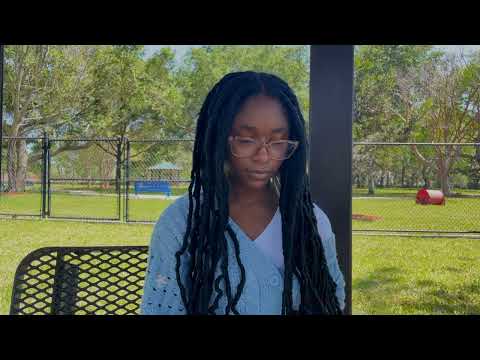
My name is Jeremmiah and I am a student of the AICE Media Studies Class. I created a 2-minute opening sequence with a group of 3(including me). The two people I worked with were Aiykiera Brown and Shonna Lauriston. Enjoy!
Thursday, April 7, 2022

Sunday, April 3, 2022
Monday, March 28, 2022
Postproduction
In this blog I will be focusing on my group's research and editing process. I will be talking about my group's research and editing process that created my sort of film rough draft.
Our rough film that we turned into teacher was not conveying the meaning we wanted. The advice that was given was that our shots needed to make sense and come together so that the meaning is given, but isn't just blatantly out. I used a series of cuts as well as a fade somewhere in there. We used that to show a change of setting and a passage of time. The cuts were used to just introduce the setting and the main character. Most of these cuts were a mix of straight cuts and normal cuts.
To film all this we used just the tech we had within our grasp which was our phones. We also used a ring light as well to give some sort of contrast of the character and the environment around/behind them. We also used the editing tool call WeVideo to edit our shots together. I learned how to apply different filters to a shot and add non-diegetic sound like background music as well as some dialogue. Some tools were confusing at first, but I got the hang of it by getting help from my group members.
There weren't any uses of equipment that were difficult to use and most of them I knew how to use on my own. I also used a monochrome filter to give off an uneasy feeling as if something is wrong. During this scene I also used the sound of crickets in the background and some high, stringy music in the next few shots to give more tension and uneasiness to the viewer. I also used a phone ringtone as well. I inserted these sounds by importing them using the feature in WeVideo. The filter were also added using a feature in the editing app. There weren't many difficulties in the process of making the rough draft and there were a few A-ha moments, but they weren't caught on film. There were also some quick changes and fixes before we submitted like switching the shots and double checking the sounds.
Tuesday, March 1, 2022
Filming
This blog will be focused on just the production. I will be talking about the thought process for the production as well as how we were able to film each shot.
Process
So what we did was look at the locations we were able to film the first day and how we determined which shots we were do was we looked at the ones that were close the location we were in currently which was school. We filmed all the shots we could and finished off with just a few shots left. We were held back as one of my group member kept forgetting her clothes to film the shot we needed, but once that hold up was finished we got the shot we needed. Later, certain shots could be filmed by only one group member so we split the work and I filmed some shots and my other group member filmed the other shots we needed. Once we were finished we looked over the shots and verified them. During all this we didn't use much just the resources we already had such as a phone(iPhone XR and iPhone 12) and a ring light. I learned that the use of light can change the look of your shot by a ton and using even a phone could make the film just as good as a camera as long as you use the right angles to convey a type of meaning. Most of our equipment was simple to use and we needed no tutorials and our shots were all brainstormed by my group and I.
Bloopers
This shot wasn't used as I was within frame which is not what we wanted.
In this shot a person walked through the door so we chose to retake it.
This shot had a bit of flooring in it and we chose to retake it as we didn't want anything, but the actor to be seen.
Branding
This blog will be talking about the thought process of my group and how we came up with the name of the production company.
Process
On the first day of creating our production company we brainstormed on what we wanted it to be. We knew it had to do with our genre and we wanted the group members initials within the name. First we made up names and searched them up to see if they were already being used. We had many names we had to change, but once we got one that was catchy and related to our genre we kept it. The final name we came up with was Dark JAS Media Productions. It was catchy and we all liked it as a group. So we then created our production companies video each of us making one and picking out the one we liked the most.
Results
Sunday, February 20, 2022
My Stripboard and Production Calendar
This blog will be talking about my group's thought process and application on scheduling the shots we wanted to shoot on each film day. It'll also contain info on our shooting scheduling as well and how it tied into the production calendar.
Stripboard
The stripboard was the first part to this two part process. First we picked out the scene we knew was going to take the most amount of time and put it in our first day of production. For my group ours was a scene in a bedroom, but we knew that it would take too much time to film in an actual bathroom so we incorporated a green screen and made it easier on all of us. The stripboard was split up into 4 days. The first day was the one I previously discussed. The second day was mostly composed of a few abandoned shots and one tying into the previous scene. Day three was focused on more abandoned shots that my group incorporated into our opening scene and our last day for shooting we shoot the two last shots that introduces our main character.
Result

Production Calendar
The production calendar's was the same idea as the stripboard. All we had to do was input the shots for each day we were going to film them. So what we did was just input the shots we were going to shoot for each day. Once we did that we revised and edited a few things and we have the product.
Result

Thursday, February 17, 2022
My Script
In this blog I will be talking on the process my group and I went through to create our current script. The script had a certain format for things such as locations, character dialogue, transitions, etc. In our script we followed what information from the observations we made on other thriller film scripts such as Get Out and Annabelle.

Process
What me and my group did to create our final script was look back at thriller film scripts we reviewed and looked at the ways they introduced their dialogue and setting and mimicked it. So our script should look similar, but rather with our opening scene. In the beginning we did our script based on our short story not paying attention, but then we looked over it and saw we had made a dire mistake. The script was supposed to be based on our opening sequence. So we altered, deleted, and added a lot of things to our script and it is completed the way you view it now. The picture shown isn't the full script, but a preview of how the rest of our script looked.
Result
Friday, February 11, 2022
Storyboarding
Storyboards are visual representations of what you want your shot to look like. You must describe each shot with details of the cinematography, mes en scene, sound, and editing; Although, there are storyboard must-haves you need to include: Shot number, shot duration, composition sketch, camera movement, and a brief description.
Location
The locations for our film will be abandoned buildings, bathroom, school, classroom, and maybe hallways. These locations were picked out based on the plot of our film and how we want our story to build up. We chose the bathroom as this would intertwine with the beginning of our film. The school because it's where the main character is introduced begins. Classroom as this is where the conflict is introduced and builds up and some shots in the hallways as certain parts of our story happens in the halls.
Actors
The actors in our film will b made up of my group members Shonna and Aiykiera as well as myself; moreover, I chose these people because they're the ones I'll be working with so I think it would be natural to go with that. We may also include other people as background characters so the shot doesn't feel so empty. Some considerations I must make is the time my group members may be able to film. One may not be able to film at night so I have to think about that when planning out my shot.
Mes en scene
The type of feeling we want our film to give is an uneasy, worrying feeling. We also want the lighting to be sort of lowkey. Enough to see the character, but less so that the viewer is always on edge. We'll also use a monochrome filter in some of our shots to give it a more eerie look. To add on to that feeling we'll add music that is subtle, but builds up over time.
Sound
Of course the film will contain sounds. The most common method we'll use is probably voiceover as it's much easier to use and doesn't require much effort. The sound will be a mix of both diegetic and non diegetic sounds like crickets and some owls to give more emphasis on the eerie factor. We may also include some sounds naturally as well if we really need to.
Storyboards
My current story board as of now isn't completely finished, but we have few good and completed storyboards done for the first few.


Schedule
Our schedule hasn't been set, but we are working on it. What we were thinking was that if some people have access to a good area then that person could take a few shots and if we can come together as a group then we could get some shots together.
Technology
Our tech won't need to be high just the basics like our phones which everyone has and maybe some use of the camera.
Friday, February 4, 2022
Scrptwriting and Funding
What did I learn about scriptwriting
The Script Itself
This post will be focused on scriptwriting. The main aspects I'm focusing on is what I learned, what other scripts look like, and an example of a script I did myself. After all this I want to be able to write a script correctly without any use of references or any type of help.
Annabelle Script


Get Out Script


These are the two scripts I chose for reference. These scripts both relate to my thriller genre and give be a good foundation on how my script should look and helps if my script may need some tweaking. The two scripts had a lot of dialogue. The Get Out script had a lot of dialogue and including talking. I noticed that when the characters would get back to speaking it would say cont'd right next to their name. Also when the character spoke it would have their name and the dialogue below. These are some things I feel are crucial to creating a good thriller film script.
Funding
Thursday, February 3, 2022
Ma Case Study
I am continuing my research on thriller films, but I am going to be going more in depth. Talking more about the production, distribution, marketing, etc. This is known as a case study which I am going to do on the the film that came out 2019 called Ma. I also learned a few new terms and their definitions.
- Synergy- when companies want to work with other groups or companies to get a product Ex: Video games, DVD, CD
- Cross media convergence- when they use different forms of media to promote Ex: Radio, magazines

The target audience for a horror/thriller like Ma is most likely young adults. From ages probably 16 and on up. This is because the twists and turns as well as the gore and violence may be too much for younger audiences to handle. Rated R pushes this information even further proving that it is for mature audience only.
Production
To start off with the production we need to go into a few key things during production. They are finding the idea, writing the script, pitching it to a studio, setting a budget, casting stars and employing a crew, filming, and editing. These are the key pieces of production that I will be talking about for the thriller film MA. The director Tate Taylor in one interview says it was based on a true story. He had said that back in his childhood when he was 8 his neighbor was stabbed to death, but in another interview it says he walked in and met his friend Jason Blum who is the Blumhouse president and they were suggesting genres when Tate said he wanted something messed up his friend was in shock, but had recently bought Scotty Landes' script Ma and he pitched it to him and he liked it so they hired Octavia Spencer to be the killer and she was thrilled to see that she wasn't killed in the first 7 minutes of the film and that she would get to be the killer herself. The script itself was never written, but was bought by Jason Blum from Scotty Landes. The script was then tweaked with the woman changing from white to black and the background of the character being much deeper based on being treated poorly from bullying to sexual abuse, Tate had gotten this idea from a girl in his school who had been bullied constantly so he took that into his head and mixed it with the character's background. The budget was 5 million and the cast was Octavia Spencer. Diana Silvers, Corey Fogelmanis, Luke Evans, and Juliette Lewis. They chose Ocatvia Spencer as the main murderer because they didn't want the normal black person dies in a few minutes type of situation, but Tate didn't want that and asked if she would be the killer and she agreed without a second thought. For the filming and editing pieces he doesn't speak on it whatsoever. He just discusses his thought process throughout the making of the film and throughout the interview just sways off topic. Although on imdb the filming locations were put out. They were:
- Natchez Veterinary Clinic
- 404 Liberty Rd
- Natchez
- Mississippi, USA
Distribution
The distribution companies that worked with Tate to create the thriller film Ma were:
- Blumhouse Productions
- Dentsu
- Fuji Television Network
Marketing and Cross-media convergence and synergy
I also chose these companies because they were the companies that produced it. The companies that helped distribute and market the film weren't stated, but based on what I've seen they've used many ways of synergy with DVD's, CD's, as well as the Blu-Rays. Cross media convergence was also used. The film was promoted with radio's as well as commercials showcasing the film's trailer. The trailer could also be found on platforms like YouTube and Instagram. The films wouldn't be in the nontheatrical category as the film is going to be displayed in theatres so I feel the way majority of films now would be theatrical as most films are in theatres and the world as gone mainly online.
The script of Ma is available, but costs money so the script will not be available.
“MA.” IMDb, IMDb.com, 31 May 2019, www.imdb.com/title/tt7958736/.
Deckelmeier, Joe. “Tate Taylor Interview: Ma.” ScreenRant, 30 May 2019, screenrant.com/ma-movie-tate-taylor-interview/.
Cea, Max. “Q&A: Tate Taylor on Directing the Year's Wildest Horror Movie, 'Ma'.” GQ, 30 May 2019, www.gq.com/story/ma-tate-taylor-interview.
Thursday, January 27, 2022
Thriller Opening Sequences
Thriller Opening Sequences
To get more information on films of the thriller genre for my Portfolio project my group members and I have conducted research on film openings. Each of us researched two which is 6 in total, but I will only be introducing 5 of them. We all know that our genre thriller has a specific audience(25 and older) as younger audiences tend to not be able to handle the twists and turns.


Run
The 2 minute 30 seconds opening sequence is a prologue using the conventional flashback method.
MES- The setting is a gloomy hospital with low-key lighting enough to see the doctors whatever they are working on. It stayed the same until the second shot. Then in the third shot it gets brighter as there are more lights. In the last shot the lighting goes back to lowkey to build suspense and give an eerie vibe.
CIN- Camera slowly gets closer in to build suspense in the first shot. In the second shot the camera is in Steadicam and the doctor appears. In the third shot there is a slow tilt up as the doctor is pushing the mother to her child. In the fourth shot the camera is steady, but the mother gets closer as she wishes to see her child.
Editing- Cutting on action from the third to fourth shot. During most of the opening sequence there were just cuts. There was a cut near the end of the last shot where the woman turned to look at the doctors and it cuts to black. The J and L cut is also used to make the music transitions smoother.
Sound- Beginning starts with high pitched music that builds up gets to its highest and goes back to the beginning process. You can also hear the monitor thing beeping and the doctors talking. One of them specifically saying, “One, two, three and repeats.” It slowly fades away and muffled talking takes over. This continues until the second shot. In the next shot it goes silent. Stringy music is then played and is built up until the mother sees her newborn baby. Uplifting music starts to play once the mother touches the glass. You can hear the beeping in the background while this is all going on. Deep eerie music than comes back on when the mother says, “Is she going to be, okay?” This music builds up then it cuts to the next scene where the opening sequence ends.
The Woman in the Window
The 2 minute 54 seconds opening sequence is a prologue using the conventional dreams method.
MES- In the first shot there was not much lighting besides the little balls of light which are used to get the viewer to feel lost or unaware of where they are. The second shot had brighter lighting most likely to make the eye pop out more during this specific shot. The lighting in this shot makes the scene look more angelic and eye opening. The third to fourth shot pan begins the lighting fades away and it looks like the scene is slowly dying. In the fifth shot lighting is lowkey, but light slowly creeps in as a stairwell is revealed. The lighting then becomes lowkey once again in the next shot but brightens up right after as the shot shifts to a pan of a room with lighting that looks to be morning. In shot 13 the lighting is lowkey tracking a cat which slowly leads into a pan into a living with brighter lighting. We then see the woman looking at the man outside bringing in boxes early in the morning. After the back-and-forth shots, the camera is looking at the woman’s back with the setting going back to the living room with lowkey lighting and a bit of sunlight from the window the woman is looking at.
CIN- In the second shot there is an extreme close up on the character’s eye. Third shot is a landscape shot also known as a long shot. The still camera then goes into a pan still in the same shot. Fourth shot is a slow tilt up to reveal a very tall staircase. Fifth shot is a pan going into the sixth shot with a medium shot as well as a pan. The seventh shot is very brief but is a close up on the woman’s hands grabbing pills. The eighth shot is a continuation of the last shot where the woman takes the pills. Ninth shot is a zoom in on what looks to be a bedroom. Shot 10 is a close up pan of a kid drawing on a chalkboard. Next shot is a close up of the woman letting in the mail carrier for a delivery. Eleventh shot is a medium-close up of the man dropping the package off. Next shot is very brief, but it shows the woman giving the mail carrier the money through a little slot in the door. Shot 13 is POV shot as well as a tracking shot as the camera is in the eyes of the woman, and she is focusing on the new neighbor bringing in boxes. The next shot is a close up of the woman’s facial expression while looking at the neighbor. Then in the next shot there is a long shot of a living room with the woman on the left side.
Editing- There is a quick cut from the first shot of black with white speckles. From the second shot there is a cut that is so smooth you can barely see it. All the way until the seventh shot I believe. There is a cutting on action from shot 7 to 8 the woman grabs the pills, and it cuts to her swallowing the pills and drinking water. Near the end of the opening scene there is back and forth editing from the woman staring at her neighbors to the shot with the neighbors moving boxes in. For the rest of the opening sequence there were just a series of cuts and quick cuts.
Sound- In the first shot the camera is twist, turning and spinning in sort of a galaxy setting and near the end you can hear a woman breathing heavily. The breathing gets deeper, and the woman is taking deeper breaths. There is also very high-pitched stringy music in the beginning as well as a subtle wind sound that builds up when the first shot is close to ending. In the second shot the woman gasps then begins breathing with a much faster pace. Third shot you can hear children playing and a deep eerie music that is constantly playing throughout the next few shots. Then the music builds up and stringy instruments jump into the mix making the next shot even more uncomfortable. You can then see and hear a computer beeping. The sounds of the kids come back into play, but this time when they are playing you can hear one little kid that screams. The music continues, but then you can hear a voiceover between a mother and her child. Then the conversation goes to the woman and her husband as the kid runs calling to his dad for a pumpkin.
Get Out
The 2 minute 41 second opening sequence is a prologue using the conventional flashback method.
MES-
-dark outside/night time
-streetlights seems to be the only lighting
-in a suburban community
-character wears a blue shirt with a leather jacket and jeans average outfit
-he looks like he doesn’t want to be there
-the other man was wearing all black and a mask
CIN-
In the first shot the beginning showed the camera zooming out and goes into a long shot as he walks into the frame, to a medium while he gets closer to the frame, to a close up when he’s looking for an address then back to medium shot which is carried out through the rest of the shot, there is also tracking used and as he gets abducted towards the end of shot 1 it goes into an extreme long shot.
Editing-
Cutting on action is used when the abductor is dragging him to the car this would show what’s happening from a different angle.
Sound-
Diegetic sound from crickets at the start of shot 1 to the sound of the car in the middle of the shot, the conversation over the phone, him talking to himself. As he notices the car stopping by him the radio in the car starts to play and as the scene goes on it gets louder making it background music which is non diegetic with the music playing in the background while he gets abducted intensifies the tension and suspense.
Flatliners
The 2 minute 35 second opening sequence is a prologue using the conventional flashback method.
CIN-
-the first shot is of looking out of the window of a moving car in soft focus. The camera itself is still.
-Shot 2 is a behind the head full shot of a blonde girl. Behind the head shot creates a mysterious effect since the view is unable to identify the character.
-Shot 3 shows another single shot close woman driving from a behind angle. It is another behind the head shot slightly because we are unable to see her face as well. This contributes to the building tension and the unknown of the characters
-Shot 4 is a two shot of both females in the front seats of a car. The camera is placed on the left side of them. The shot gives us a close up of the women in the driver’s seat (dark hair) face. She is slightly out of focus while the blonde child in the seat next is her is in shallow focus. Their faces are now visible which decreases the tension within the opening.
-shot 6 changes to a single eye-level medium close –up shot of the dark hair women driving.
-The camera switches to a single eye-level close up of the young blond girl.
-In shot 9 the use a dolly in on the young blonde girl in the passenger seat. This is to convey something is about to happen to her.
-Shot 10 is a single shot close up of the dark-haired women. They use a close up to emphasize the look of panic she has on her face while glances to her lap and back to ride like she is distracted.
-The next 6 shots (11-17) show different angles of a car crashing off the side of the road. They use POV shots from the front windshield of the car. They also use low angles and full shots of the car flipping over the bridge.
-Shot 18 and 19 were close ups of what looks like an operating room. This gives insight to film that it relates to a hospital that experiences a lot of life and death.
-Shots 19 and 20 use a cut-in from a full to a close shot of a dead body on an operating table.
-shots 21 and 22. Show various aspects of a cemetery using eye-level shots of the tombstones jump cuts.
-Shots 19-25 are jarring, very quick jump shots.
-The outer edges of the shots of blurry making it pay close attention to what is in crisp focus.
-Shot 28 is a pan up at the foot of a Mortuary table.
Editing
-The first 1-4 shots cut away to credit scenes and back to the main storyline.
-The credits screens are a plain black background with off white coloring of the font. There are slight green and blue streaks quickly appearing and disappearing.
-Shots of (11-17) are jump cuts of the car crashing.
-The title of the opening zooms out. The font looks as if it is beating to the beating like a heart.
-Shot 25 transitions to 26 using a zoom in dissolve effect almost going from a full shot of a cemetery to a close up of tombstones
-Shot 26- 27 use a flash transition of a close up of casket to a tombstone.
-shot 23 to 24 transitioned using a flash
-All the flashes provided anticipation and tension in the viewer.
-At the end of the opening the flashes to a black screen, which adds to the building tension.
MES
-The first scene had a tint. Light gray in films typically relates to loss or depression.
-A young blonde girl wearing a pink sweater is traveling in a car with another woman with dark hair who is driving. In Shot 5 and 6 They both seem to be happy and smiling. The blonde’s hair is lightly moving to the wind. Behind the head shot creates a mysterious effect since the view is unable to identify the character.
-The first shot you can make out trees and ln pass them. They are traveling.
-In shot 6 of the women driving, she looks happy.
-In shot 7 the young blonde girl is wearing pink and smiling looking over the women in the driver seat. This conveys that good have a good close relationship.
-the title is revealed after the car accident. The title is in white font, with what looks like blurry glossy lights in the background. There is also a heart monitor line going through the title at a vertical angle.
-The light grey tint changes to an almost orange yellow-ish color. This makes the audience uncomfortable. Orange tint typically makes the feelings of caution or warning arrive.
Sound
-non-diegetic eerie music is playing, raising the tension in the sequence. The music increases as the sequence goes on.
-In shot four, diegetic sound of the young girl screaming “look out” before the crash adds to the suspension and tension.
-When the faces of the characters get revealed, the music eases up on the tension feeling until shot
- -In shot 11 the young girl has a diegetic screams “Courtney”.
-shots 11-17 we can hear the non-diegetic screeching of the car’s brakes.
-the also provide diegetic sounds of the crash smashing. This creates a sense of emergency and tension in the viewers.
-The use a diegetic sound of women crashing into the water which adds to the tension and emergency within the scene.
-during the car crash the music stops and lets the density play.
-A fast paced high pitch music sounds playing during the title reveal.
-the music in the background also has a kind of heart type of rhythm to it. (non-diegetic) It can be assumed that this film has a lot to do with life and death. The sound of a heartbeat in a thriller is often used to convey a character is near death or shaken up.
-After the title, non-diegetic whispers start to play over the music. This dramatically increases the tension. The whispers appear to be talking about seeing something due to something happening to their body. They use words like “lifeless” and “out of body experience” contributing to the shots they have of cemeteries and operation rooms. From this you can interpret that the film has a lot of as to do with death and loss and making these high-tension situations.
-At the end of the opening. One of the whispers on the black screen goes “I'm sorry” which build tension and disturbs the viewer. (non-diegetic)
Shot by Shot Analysis
Shot by Shot Analysis
Gone Girl
Shot 1


The first scene is of a blonde woman laying down getting her hair stroked slowly by the hands of a man. This represents a relationship dynamic; the male has the power and control. She appears to have no makeup on and laying in comfortable or lounge clothing. we suspect this from the lighting, conveying it could be early morning.
Shot 2

The opening credits appear on a blank screen centered with white lettering.

The title of the film appears on a beach or shore background, still with white lettering and the three seconds. You can see a ship or boat in the distance. The sky appears to be a deep blue and pink color, signifying it’s either around sunrise or sunset time.
Shot 2
The opening credits appear on a blank screen centered with white lettering.
The title of the film appears on a beach or shore background, still with white lettering and the three seconds. You can see a ship or boat in the distance. The sky appears to be a deep blue and pink color, signifying it’s either around sunrise or sunset time.
Shot 3

A full shot of a building.
A full shot of a building.
Shot 4

A close up low angle of a sign.
A close up low angle of a sign.
Shot 5

Another angled down close-up of a building.
Another angled down close-up of a building.
Shot 6

A medium shot of a building.
A medium shot of a building.
Shot 7

A wide shot of a house.
A wide shot of a house.
Shot 8

A full of a reduced house from the front.
A full of a reduced house from the front.
Shot 9

A full shot of the landscape of a house.
A full shot of the landscape of a house.
Shot 10

A close up lifted pavement.
A close up lifted pavement.
Shot 11

A medium shot of a alley way.
A medium shot of a alley way.
Shot 12

A medium shot of a supply store.
A medium shot of a supply store.
Shot 13

A close up picture of a safety sign and building in the back.
A close up picture of a safety sign and building in the back.
Shot 14

A close up shot of a pillar.
A close up shot of a pillar.
Shot 15

A full shot of a broken down house.
A full shot of a broken down house.
Shot 16

Shots 3-16 cut around to different abandoned buildings and outside areas. This could be showing isolation or emphasizing the abandonment element of the setting or characters.
Shot 17


Shots 3-16 cut around to different abandoned buildings and outside areas. This could be showing isolation or emphasizing the abandonment element of the setting or characters.
Shot 17
Shot 17 is a panning shot from the bottom of the clock to the top showing a broken clock that stopped at time 7:55. This could be significant later on into the story. The eerie non-diegetic music gets louder as the sequence continues. This contributes to the tension element.
Shot 18

The scene 18 is a knee-level shot of a male standing in front of a house looking lost. This makes the man look weird, suspicious, and mysterious as this isn't normal behavior.
Shot 18
The scene 18 is a knee-level shot of a male standing in front of a house looking lost. This makes the man look weird, suspicious, and mysterious as this isn't normal behavior.
Shot 19

Scene 19 is a long shot to the left side of the man continuing to look lost. The shot appears to be slightly low. This could be to signify the power of man. Lots of shadows that contribute to the mysterious feeling.
Scene 19 is a long shot to the left side of the man continuing to look lost. The shot appears to be slightly low. This could be to signify the power of man. Lots of shadows that contribute to the mysterious feeling.
Shot 20

Very low lighting conveys tension. The tones used are very dull blues, grays which gives a fickle feeling.
Shot 21

The last scene is a man wearing a gray t-shirt and jeans.- gray conveys compromise, neutral, control, practical. His plain clothing or the color of them give no insight or a neutral feeling to him to give him to add a mysterious affect. Or to show just how normal he really is.
Shot 21
The last scene is a man wearing a gray t-shirt and jeans.- gray conveys compromise, neutral, control, practical. His plain clothing or the color of them give no insight or a neutral feeling to him to give him to add a mysterious affect. Or to show just how normal he really is.
Wednesday, January 26, 2022
Conventions of a Thriller
Thriller Conventions
What kind of movie: Thriller
Basic Genre Conventions
- Low Key Lighting
- Quick Cuts
- Shadows
- Music Buildup(to add tension)
- Changes in the angles of shots
- Diegetic sound of breathing
- Black and white shots
- Montage of shots
- Protagonist is in the mercy of antagonist
- The audience will think that it can happen to them, which will make them feel scared and/or worried
- Lots of close ups/extreme close ups of the protagonist
- Quick cuts and the identity hiding of antagonist]
- Main environment is an isolated or dark area
Thursday, December 16, 2021
My Music Video Blog
Music Video Project
For a week and a half we worked a project that was given to us in class. We had to make a music video using a Christmas song of our choice. There were four parts that were crucial to making the music video. Scripting, storyboarding, filming, and editing. We also had a certain time period to get each part done.
Scripting
For the scripting we had a certain website that was suggested to us(Me: Jeremmiah and Destiny) by our teacher Ms. Landis. The website was called studio binder and had multiple features used for media, but what we needed was just the scripting feature. When we got the scripting opened we had to watch a tutorial on how to set up and write a script. It told us certain things that were crucial to a script like stating the time of day and the place the shot would take place. We had nine shots so we had to say the time of day and the setting. Once we did that we transferred to storyboarding.
Storyboarding
Storyboarding is basically putting you script into real images. For the storyboard all we had to do was find an image online that had the same angle and same idea as your shot and paste it into the box. To get the storyboard we also used studio binder, but I can't really remember how I put the storyboard on word. After putting the pictures in we had to describe what was happening in each shot which was really easy since we already had that on our script. Now that the script and storyboard is done we start filming.
Filming
We only had three days to film as our teacher wanted the last two days of school for editing and then we'd turn it in on Monday. So our idea was to record the staff of Coconut Creek Highschool singing and dancing, but me and Destiny got nervous every time we wanted to talk to one of the staff so we switched our idea to recording out classmates instead. Once we told our teacher about the switch we started to record. Our first shot wasn't really in mind at the time so we recorded our second shot and from that to the third and so on so forth. As it hit the final day to film I suggested that we start editing early, but my partner refused and we waited until the first day of editing.
Editing
Editing to me was the hardest part of the entire project. It took patience and trial and error. We only had 2 days to put our shots together and put the song over. When me and my partner started editing we realized we weren't as prepared as we thought we were. Our shots were too short and we'd record the same parts of the song over and over. So we had to rush and find classmates willing to sing and dance and luckily we did. We re-recorded all our shots and I started putting them together in wevideo to me this was the most aggravating part of the whole project. I had to insert and take certain things out and every time I made a change I had to re-watch that part of the video to see if it looked good and made sense. I just went through that process over and over until I had got what I wanted.
I found that editing is a lot more tedious than I had expected and because of me and my partners errors the filming was also a hassle, but other than those two things the making of the video was so fun. I got to have fun when recording and so did my classmates.
The final product is right here:
https://www.youtube.com/watch?v=m6YbtVyfAuw
Wednesday, November 17, 2021
Editing Softwares
Editing Software
When looking for an editing software I wanted to use I looked for these minimum requirements.
- Accessible from anywhere(web-based)
- Ability to lay multiple tracks (both audio and video)
- Ability to strip or mute audio and natural sounds from video
- Ability to collaborate with other users
Openshot
- Cross-Platform
- Trim and Slice
- Unlimited Tracks
- Title Editor
- Video editing
- 70+ languages
- Video Effects
- Audio Waveforms
- Slow Motion & Time Effects
- Simple User Interface
- 3D Animations
- Animation & Keyframes
Clipchamp
- Has customizable video templates
- Can mix and match stock footage and audio
- Includes technologies that let you compress, convert, collect, record and create videos without delays in rendering or locked in file formats that are hard to convert or share
- Allows collaboration through Teams
- Edit
- Cut
- Color(Color Corrector)
- Fusion(Lets you add effects and animations)
- Fairlight(Audio editing tool)
- Media and Delivery(everything you need to import, manage and deliver final projects)\
- Multi User Collaboration\
- Easy video editing
- Contains effects and transitions
- Supports all popular video formats seamlessly
- Easy to use
- Has video templates
Friday, October 29, 2021
Film Openings
Film Openings
An opening action sequence is meant to grab you.
Key Elements to a film opening:
Plot
Setting
Characterization
Structure
Theme
How to start a movie in 6 different ways:
Technique 1: Enter the villain - Commonly used in action
Technique 2: Enter the hero - Commonly used in action
This type of opening raises the stakes, introduces characters, and key plot points while making sure the audience is in for the ride.
Technique 3: Establish relationships - Mainly used on dramas
Tells the audience about the characters.
Technique 4: Plot catalyst
Technique 5: Follow genre
The plot and things happening in the movie is what helps us follow the genre.
Technique 6: Flip genre
Film Opening Analysis
Film Opening Analysis

Luca(2021)
The film Luca is about a curious sea creature named Luca who wants to see the surface, but is afraid knowing he'd get in trouble and be berated. Luca finds some "human objects" and hides them in his room. Luca while watching the fish went to look at some shining objects, but meets a sea creature like him named Alberto. They then go to the surface where humans live. Luca and Alberto build a moped and bond through trial and error. They see a town and want to visit. They arrive in the town of Portorosso where they meet a human friend named Giulia(Julia). Together they compete in the Portorosso cup which is a race involving swimming, eating, then a bike race. First to pass the finish line wins the Portorsso cup. Alberto bails as he reveals his identity as a sea creature and Luca betrays him. Luca and Giulia compete in the Portorosso cup by themselves as they have no third teammate. Luca nd Giulia finish the swimming and eating portion, but still have the bike race to finish. Towards the end of the bike race Luca finds himself in a pickle as it starts to rain. Alberto comes running to Luca with an umbrella, but is tripped by the film's bully and his identity is revealed to the entire town. Luca goes to save Alberto and the bully tries to kill him. They race to the finish line avoiding the bully's killing blows. Luca and Alberto pass the finish line and win the race. The town accepts them as they are and are now welcome any time. Later after Luca goes to school with Giulia and Alberto stays with Giulia's dad. Alberto and Luca part ways at the end and Luca rides a train to Giulia's mom house.
The opening scene of Luca starts off with an establishing shot focusing on a boat passing. They then ride the boat to catch some fish, but found the sea creature they thought was fake. They then tried to drive away, but the sea creature had gotten tangled in the net. Once it escaped one of the fishermen threw a spear, but missed.
The opening scene connects to the original film as it introduces the main fear of the citizens of Portorosso the sea creatures. It shows that these sea creatures are greatly feared and are hunted.
The purpose of the opening scene is to show what the people in the movie are most afraid of and how the thing they fear looks.

The Greatest Showman(2017)
The Greatest Showman is a film about a boy who went from the bottom to the top wanting to become a circus owner. At the age of 12 he was selling lottery tickets and realized he had a natural talent for promotion and publicity. He went and applied for multiple businesses and rose from nothing to creating the Barnum & Bailey Circus. Featuring catchy musicals, exotic performers, and daring acrobatic feats. Through all this the circus quickly became the best show in the world.
The Greatest Showman's opening scene starts off with a bit of credits that included the company the filmmaker worked with. It then goes from credits to a man with a cane and a hat. He then starts walking at a fast pace towards a circus stage. The lighting when he's walking is lowkey and hides his back in one shot and then his face in another. The man then starts to sing as he shows off his acrobats and exotic performers. It then goes from bright and slowly gets dimmer till the acrobats and the performers aren't visible besides the man.
The opening scene links to the movie as it introduces one of the main characters of the film. The creator of the Barnum & Bailey Circus. It basically puts the summarization of the movie in graphic form as it shows the exotic performers and daring acrobats.
The purpose of this opening scene is to show the dreams a young boy who wishes to follow his dreams and do what he does best.

Annabelle Comes Home(2019)
Ed and Lorraine determined to keep Annabelle from wreaking more havoc. They lock her up in the artifacts room in their house. But the doll awakens as one of the friends of Ed and Lorraine's babysitter opened the box and didn't completely shut it. It quickly becomes an unholy night of terror Ed and Lorraine's 10 year old daughter, her friends, and their young baby sitter.
The opening scene for Annabelle Comes home is a title sequence that introduces the actors and contributors to the film. It starts of with the showing of Annabelle on the right of the screen as the company is shown on the left. This continues, but the actors are shown with different colors and the names appear in different locations of the screen. They also include the music producer. producers, and executive producers.
The opening scene ahs very lowkey lighting as most of the images of the characters are hidden halfway and look traumatized. I also noticed that all of the characters that appeared in the credits are in the film itself and shows that their going to be involved in the plot someway/somehow. The look the character face and the dark color shades signifies this movie is horror and emphasizes the scary aspect even more.
The purpose of this opening scene is to give the viewers an idea of who they'll see in the movie. It gives a scary vibe to the credits which gives the meaning that the film is likely to be a horror film. It also introduces the actors and contributors to the film.
Wednesday, October 6, 2021
Mis-en-Scene
Mis-en-Scene Research
Mis-en-Scene is a French phrase and means staging or putting on an action or scene. In film the term Mis-en-Scene basically means the overall look and feel of a movie.
Mis-en-Scene has two major visual components which are design and composition. Design being the look of the setting, props, lighting, and actors and composition being the organization, distribution, balance, and the general relationship of actors and objects. Mis-en-Scene in a movie affects how we think of the characters and the story. Another thing is that every object is placed within the frame for a reason but every object does not have a meaning but rather the combination of objects creates the elements that create the meaning. The Mis-en-Scene is what the filmmaker wants us to pay attention to the most as it helps the viewers understand their themes and concepts. The Mis-en-Scene also allows the viewer to experience a certain place and time and is important for how it makes the viewers feel. The Mis-en-Scene is also meant to complement the story as too much Mis-en-Scene can be distracting. One more thing that can completely change the Mis-en-Scene is the genre as every genre has their own common shot types, lighting, props, etc. and it all varies when you're trying to make it match the sort of theme of the movie to make it more either spooky or maybe all love and romance, things like that are what makes Mis-en-Scene very unique in its own way.
In the end I learned that things like lighting and props in movies aren't there just to be there, but rather used to convey meaning. I also learned that Mis-en-Scene can allow the viewer to experience a certain time and place. This means that the props, colors of the furniture and clothing, and the costuming gives the viewer a sense of different time period. Ex: A woman wearing clothing that looks similar to the one Egyptians wore. This is giving the viewer the sense that we are in a different time period.
Sources:
Subscribe to:
Posts (Atom)
Final Production
My name is Jeremmiah and I am a student of the AICE Media Studies Class. I created a 2-minute opening sequence with a group of 3(including m...
-
What did I learn about scriptwriting The Script Itself This post will be focused on scriptwriting. The main aspects I'm focusing on is...
-
In this blog I will be talking on the process my group and I went through to create our current script. The script had a certain format for ...
-
This blog will be focused on just the production. I will be talking about the thought process for the production as well as how we were able...

